
Before you say yes to anyone
Two damp quotes on the same wall can look like they are describing two different houses. One contractor has decided your Victorian terrace off Beech Road needs a full chemical damp proof course. The other has spotted a cracked gully and a re-laid patio sitting three courses above the original slate DPC. Same brickwork, very different work, very different invoice.
So before you hand over a deposit, run the company through the checklist below. It is built around the questions that separate a proper diagnosis from a sales visit, and it applies to rising damp, penetrating damp and condensation with black mould alike.
The 10-point checklist
1. Did they inspect outside as well as in?
A surveyor who only walks the inside of the house has seen half the story. Ground levels, airbricks, pointing, render, gutters, downpipes and gully positions all affect what moisture gets into a wall. On South Manchester terraces, raised path levels, cement render slapped over solid nine inch brick and blocked airbricks down the ginnel side are common culprits worth ruling out before anyone injects anything.
Why it matters: if the external cause stays, the internal repair may fail.
2. Did they name the type of damp, not just "damp"?
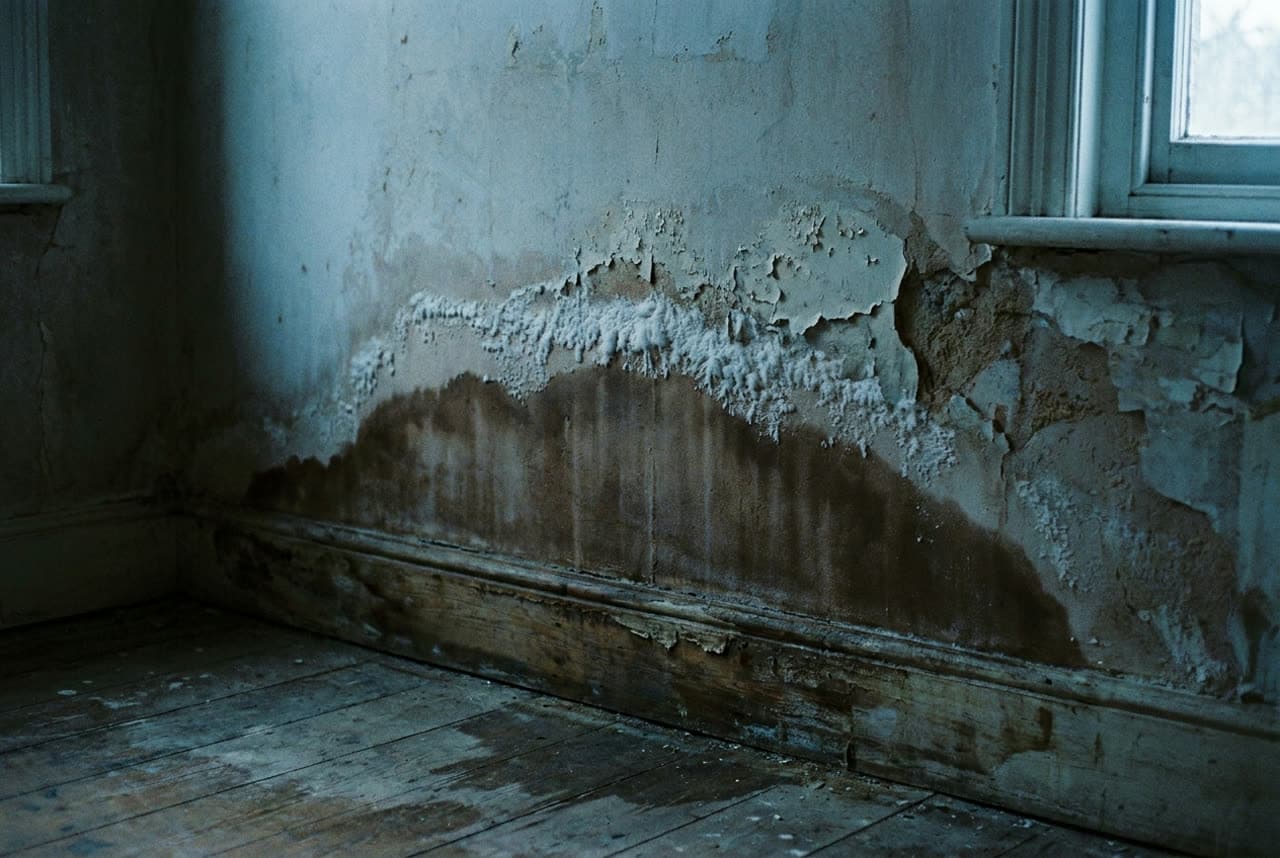
Rising damp, penetrating damp and condensation can look similar on a wall but are treated differently. Tide marks, salting and blown plaster near skirting level often point one way. Patches that darken a day or two after driving rain hits an exposed gable point another. Mould in corners, around window reveals and behind a wardrobe on an external wall usually points to condensation and ventilation.
Why it matters: a chemical DPC will not fix a condensation problem, and a dehumidifier will not fix a bridged wall.
3. Is the diagnosis given to you in writing?
Ask for the findings on paper, not just a figure. A written record of what was found, where it was found, and what the contractor believes is causing it is what lets you compare one company against another on like for like terms.
Why it matters: a verbal "it's rising damp, love" cannot be checked, challenged or held to.
4. Does the quote itemise the work?
You want to see what is actually being done: chemical DPC injection, removal of contaminated plaster, salt-retardant re-plastering, treatment of affected timbers, making good. You also want to see what is excluded, such as decoration, skirting replacement or electrical refitting.
Why it matters: itemised quotes stop the "that wasn't included" conversation happening halfway through the job.
5. Is re-plastering part of the plan?
Where a chemical DPC goes in, old salt-contaminated plaster usually has to come off and be replaced with a salt-retardant render. If a quote covers injection but says nothing about plaster, ask why. Chorlton Damping uses salt-retardant re-plastering as part of its rising damp work, and it is a fair thing to expect from anyone quoting.
Why it matters: hygroscopic salts left in old plaster keep pulling moisture out of the air, so the wall can look damp long after the cause is dealt with.
6. What exactly does any guarantee cover?
If a company offers one, read the document rather than the headline. Which walls does it apply to, what counts as a failure, does it transfer if you sell, and what would void it?
Why it matters: the length of a guarantee tells you far less than what it actually promises.
7. Are they a local, traceable business?
Look for a real trading history, a named team, reviews from streets and areas you recognise, and a phone number someone answers. Chorlton Damping is a father and son team working across Chorlton, Whalley Range, Didsbury, Stretford and the rest of South Manchester, so the person quoting is the person doing the work.
Why it matters: any promise is only as good as the business standing behind it later on.
8. Have they explained the ventilation side?
If mould is part of the problem, a good specialist will talk about moisture production, extraction and air movement, not only treatment. Blocked up fireplaces, painted-over airbricks, missing trickle vents and bathroom fans that cut out the second the light goes off are all worth checking in a Manchester terrace or a converted flat.
Why it matters: treated mould that comes back usually means the moisture source was never addressed.
9. Does a pre-purchase survey come as a proper report?
If you are buying and the valuer has flagged damp, you need a written specialist report you can put in front of the seller, your solicitor or your lender. Ask whether you receive a standalone document with findings, photographs and recommendations.
Why it matters: a report gives you something to negotiate with. A verbal opinion does not.
10. Did they try to pressure you?
Unhurried advice is a fair thing to expect. A discount that only stands if you sign before the surveyor leaves, or a flat refusal to put anything in writing, is worth walking away from.
Why it matters: damp work is disruptive, so it is worth getting right rather than getting rushed.
How to use the checklist
Get more than one opinion where you can, and give each contractor the same information: when you first noticed it, whether it changes with the weather, what the room is used for, and what has already been tried. If two surveys disagree, the one that explains the mechanism, and shows you the evidence outside as well as in, is usually the one worth trusting.
Keep every written diagnosis, quote and guarantee document together in one folder. If you sell the house later, that paperwork answers the buyer's survey before it turns into a price negotiation.
Talk it through
If you have damp, salting plaster or black mould in Chorlton or anywhere across South Manchester, call Chorlton Damping on 07960 613199, or send a few photos with a description of what you are seeing, and you can work through the checklist above together.
How do I know if I need a damp survey or just a quote?
If the cause is obvious, such as a failed gutter soaking one patch of wall, a quote for the repair may be enough. If the pattern is unclear, if the problem keeps coming back, or if you are buying the property and a valuer has flagged damp, a written specialist diagnosis is more useful because it tells you what is actually happening before any work is priced.
Does a damp specialist need to replaster after installing a damp proof course?
Where a chemical DPC is installed, the old plaster on the affected wall is often contaminated with salts drawn up from the brickwork. That plaster is usually removed and replaced with a salt-retardant render, otherwise the wall can continue to look and feel damp. Chorlton Damping uses salt-retardant re-plastering as part of its rising damp treatment.
What should a damp proofing guarantee include?
Check which walls and which treatments are covered, what is classed as a failure, whether the guarantee transfers to a new owner, and what might void it, such as later alterations or ground levels being raised against the wall. Read the document before the job starts rather than after, and keep it with your quote and written diagnosis.